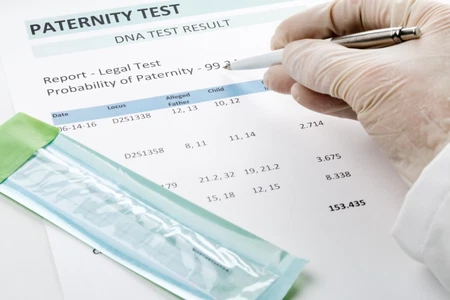
A Non-Invasive Prenatal Paternity Test Philippines can help expectant parents address questions about biological paternity before the baby is born. Unlike traditional paternity testing performed after delivery, prenatal testing can provide information during pregnancy. Modern non-invasive methods use a blood sample from the pregnant mother rather than collecting fetal tissue. The laboratory analyzes cell-free fetal DNA found in the mother’s bloodstream and compares relevant genetic information with DNA from the alleged father. Some testing providers in the Philippines currently offer this service during early pregnancy, with specific requirements varying by provider and testing method. For families facing uncertainty, understanding how the process works can make it easier to evaluate testing options carefully and responsibly.
What Is a Non-Invasive Prenatal Paternity Test?
A Non-Invasive Prenatal Paternity Test Philippines is a DNA test designed to assess whether a particular man is the biological father of a baby before birth. The testing process uses fetal genetic material that can be found circulating in the pregnant mother’s blood. This cell-free fetal DNA originates largely from the placenta and can be analyzed without collecting a sample directly from the fetus. The alleged father typically provides a DNA sample through a cheek swab, although exact collection requirements depend on the testing provider. The laboratory then compares genetic markers from the available samples to determine whether the alleged father’s DNA is consistent with biological paternity. This approach differs from invasive procedures because it does not require entering the uterus to obtain fetal or placental tissue. Modern laboratory technologies have made it possible to analyze low concentrations of fetal cell-free DNA for specialized prenatal applications.
How Does Prenatal Paternity DNA Testing Work?
The process generally begins with the collection of a blood sample from the pregnant mother. This blood contains maternal DNA as well as small fragments of cell-free fetal DNA that can be separated and analyzed by an appropriate laboratory. The alleged father normally provides a cheek or buccal swab containing his DNA. The laboratory examines genetic markers from the samples and uses statistical analysis to assess whether the alleged father is genetically consistent with the fetus. Providers in the Philippines describe using maternal blood and an alleged father’s cheek swab for this type of testing. The laboratory then prepares a report explaining the result according to its testing methodology and reporting standards. Because specialized prenatal testing involves fetal DNA at relatively low concentrations, the laboratory’s technology, sample quality, and testing procedures are important considerations.
When Can a Non-Invasive Prenatal Paternity Test Be Performed?
The appropriate testing time depends on the laboratory and the particular technology being used. Some providers in the Philippines advertise prenatal paternity testing from approximately seven weeks of pregnancy, while other providers specify around ten weeks. This difference means prospective patients should not assume that every testing center follows the same minimum gestational age. A provider may request documentation such as an ultrasound confirming the pregnancy and its gestational age before accepting a test. Timing matters because the proportion of fetal cell-free DNA in maternal blood can be relatively low during early pregnancy. Patients should therefore confirm the provider’s requirements before scheduling blood collection. Speaking with an obstetrician or qualified healthcare professional can also help ensure that paternity testing is considered separately from routine prenatal care.
Why Choose a Non-Invasive Testing Approach?
One of the main reasons people consider non-invasive prenatal paternity testing is that the mother’s blood can be collected without directly accessing the uterus. A routine blood draw is substantially different from procedures that require an instrument to enter the uterus or obtain placental or amniotic samples. Prenatal diagnostic procedures such as chorionic villus sampling and amniocentesis have specific medical indications and should only be performed when medically appropriate. A prenatal paternity test has a different purpose because it is intended to assess biological paternity rather than diagnose fetal chromosomal or genetic conditions. Using maternal blood for specialized DNA analysis can therefore provide an option for people seeking paternity information without requesting an invasive fetal sampling procedure. Providers offering prenatal paternity testing in the Philippines describe the service as using maternal blood and an alleged father’s buccal sample. Even when choosing a non-invasive method, expectant parents should continue their regular prenatal appointments and follow their healthcare provider’s recommendations.
What Samples Are Needed for Prenatal Paternity Testing?
The mother’s sample is generally collected through a blood draw performed by a qualified healthcare professional or trained collection provider. The alleged father commonly provides a buccal swab, which collects cells from inside the cheek. Some providers may have different collection requirements, so patients should confirm the exact instructions before attending an appointment. For example, current Philippine testing services describe collecting maternal blood and an alleged father’s buccal swab for laboratory analysis. Identification and documentation can also be important when samples are being collected for a specific testing purpose. Patients should follow instructions regarding identification, sample handling, and collection carefully to minimize the possibility of processing problems. If a laboratory determines that a sample is inadequate or cannot produce a reliable result, it may recommend recollection or another appropriate testing step.
How Accurate Is a Non-Invasive Prenatal Paternity Test?
Accuracy is one of the most important considerations when choosing a Non-Invasive Prenatal Paternity Test Philippines. A reliable result depends on appropriate sample collection, validated laboratory procedures, adequate fetal DNA, and the genetic analysis used by the testing provider. Laboratories may examine large numbers of genetic markers and use statistical calculations to determine the probability of paternity. Some providers advertise paternity probabilities of 99.9% or higher when their testing criteria support inclusion, but consumers should understand that advertised performance figures are provider-specific. The technology behind prenatal testing is designed to work with cell-free fetal DNA, which is present in relatively small amounts compared with maternal DNA. Patients should ask the laboratory how results are interpreted and what happens if the available DNA is insufficient. It is also important not to confuse prenatal paternity testing with prenatal genetic screening, because these tests answer different questions.
What Can Affect Prenatal Paternity Testing?
Several factors may influence whether a prenatal paternity test can be successfully performed. Gestational age is important because the amount of fetal cell-free DNA available for analysis can be relatively low during the earliest stages of pregnancy. The quality and quantity of the collected samples can also affect laboratory processing. Certain pregnancy circumstances may require additional discussion with the testing provider before a sample is collected. Multiple pregnancies can create additional genetic considerations, and testing providers may have specific policies for twins or other multifetal pregnancies. Some providers may also have restrictions when the alleged fathers are close biological relatives because genetic interpretation can become more complicated. Asking detailed questions before booking can help patients determine whether the selected laboratory can accommodate their specific pregnancy circumstances.
Choosing a Prenatal DNA Testing Provider in the Philippines
Selecting the right provider is an important part of obtaining a reliable and appropriately documented test. Patients should look for clear information about the laboratory performing the analysis, sample collection process, testing methodology, privacy procedures, and expected turnaround time. A provider should be willing to explain what the test does, what it does not establish, and what circumstances may affect the result. Current Philippine providers offer prenatal paternity services through selected clinics, and some advertise home collection options in particular locations. Availability can differ by city, so patients should confirm the current collection location before making an appointment. It is also helpful to ask whether the quoted price covers sample collection, laboratory analysis, and delivery of the report. Most importantly, patients should understand whether they are ordering a private informational test or a test intended to meet formal legal requirements.
Personal-Use and Legal Paternity Testing Are Different
Not every DNA paternity test is automatically suitable for court or official proceedings. A private paternity test may be designed primarily to provide information to the people involved, while a legal test generally requires documented procedures for identity verification and chain of custody. If the result may eventually be used for a legal matter, patients should tell the provider before the samples are collected. The provider can then explain whether a particular testing procedure meets the documentation and collection requirements needed for that purpose. Some Philippine DNA testing providers distinguish between legal testing with supervised collection and other testing services. This distinction can be especially important when a person expects the DNA report to be presented to a government agency, attorney, court, or other official organization. Asking about legal requirements before testing can prevent the need to repeat the procedure later.
Privacy Matters When Testing During Pregnancy
Paternity testing involves highly personal genetic and family information, so privacy should be an important consideration. Before providing a sample, patients should understand how their information and test results will be handled. Questions about who can access the report, how results are delivered, and whether samples are retained can help patients make an informed choice. A professional testing provider should be able to explain its privacy practices in understandable language. Confidential handling is particularly important when the test involves sensitive family circumstances or uncertainty between potential parents. Patients should also be cautious about sharing genetic reports through unsecured communication channels or with people who are not authorized to receive them. Choosing a provider that clearly explains its confidentiality procedures can help protect both personal information and genetic data.
What to Expect Before, During, and After Testing
Before the appointment, the pregnant mother should confirm the pregnancy stage and review the provider’s testing requirements. The testing center may request identification, pregnancy documentation, or other information needed to process the request. During collection, the mother generally provides a blood sample while the alleged father provides a cheek swab or another required DNA sample. A trained professional should follow the provider’s procedures for identifying and handling the samples. After collection, the samples are sent for laboratory analysis, where specialized techniques are used to compare the relevant genetic information. Turnaround time varies between providers, with some Philippine services currently advertising approximately 7 to 12 working days depending on the service and laboratory process. Once the report is available, patients should review the result carefully and contact the provider if they need clarification about the terminology or statistical interpretation.
Questions to Ask Before Booking a Prenatal Paternity Test
Asking questions before booking can help expectant parents select a service that fits their needs. First, ask how many weeks pregnant the mother must be before testing can be performed. Next, ask which samples are required from the mother and alleged father and where those samples will be collected. Patients should also ask which laboratory performs the analysis and what testing technology or genetic markers are used. It is useful to confirm the total price, expected turnaround time, possible additional charges, and the procedure if a sample cannot produce an interpretable result. If the result might be needed for legal purposes, patients should specifically ask whether the provider offers a legal chain-of-custody procedure. Finally, ask how results are protected, who can receive them, and what options are available for discussing questions about the report.
Non-Invasive Prenatal Paternity Testing and Regular Prenatal Care
A prenatal paternity test should be viewed as a specialized DNA service rather than a replacement for routine pregnancy care. Expectant mothers still need appropriate prenatal appointments, medical assessments, ultrasounds, and other screenings recommended by their healthcare professionals. Paternity testing answers a question about biological parentage, while prenatal screening and diagnostic testing address different medical questions. Patients should not skip recommended prenatal procedures because they have already undergone a paternity test. If a pregnant woman has concerns about the safety, timing, or medical implications of any testing, discussing those concerns with her obstetrician is appropriate. A healthcare professional can also help distinguish paternity testing from prenatal genetic screening and explain which medical tests may be recommended during pregnancy. Keeping these purposes separate helps families make more informed decisions while maintaining appropriate pregnancy care.
Frequently Asked Questions About Non-Invasive Prenatal Paternity Testing
Can a paternity test be performed while the mother is pregnant?
Yes, specialized non-invasive prenatal paternity testing can be performed during pregnancy. The process generally uses fetal cell-free DNA obtained from the mother’s blood and compares it with DNA from the alleged father. Philippine providers currently advertise prenatal testing during pregnancy using this approach. The exact minimum pregnancy age depends on the provider and its testing methodology. Patients should confirm the required gestational age before scheduling an appointment. The test should also be discussed separately from routine prenatal medical care. A qualified healthcare professional can provide additional guidance about pregnancy-related concerns.
Is a non-invasive prenatal paternity test safe for the baby?
The non-invasive approach uses a maternal blood sample rather than directly collecting fetal tissue. This distinguishes it from invasive procedures such as amniocentesis or chorionic villus sampling. Providers offering prenatal paternity testing describe the method as using maternal blood to obtain cell-free fetal DNA. The blood collection itself is similar in general form to other blood draws. However, patients should still discuss any concerns about testing during pregnancy with their healthcare professional. The paternity test should not be treated as a substitute for medically indicated prenatal testing.
How early can prenatal paternity testing be performed?
The answer depends on the provider and laboratory methodology. Some Philippine providers currently advertise testing from approximately seven weeks of pregnancy, while other providers specify around ten weeks. Patients should therefore verify the minimum gestational age directly with the chosen provider. An ultrasound may also be requested to confirm pregnancy and gestational age. Because fetal cell-free DNA is present at relatively low levels during early pregnancy, timing can be important for successful analysis. A healthcare professional can also help determine whether the planned testing fits appropriately into the patient’s prenatal care.
Does the alleged father need to provide a DNA sample?
In many prenatal paternity testing procedures, the alleged father provides a cheek or buccal swab. This sample provides the paternal DNA needed for comparison with the fetal genetic information identified from the mother’s blood. Philippine providers currently describe this combination of maternal blood and alleged-father cheek-swab collection. The exact collection procedure can vary between laboratories. Patients should confirm the sample requirements before making an appointment. If the alleged father cannot provide a sample, some providers may discuss alternative relationship-testing options. Such alternatives should be evaluated directly with a qualified testing provider.
How accurate is prenatal paternity testing?
Prenatal paternity testing can provide highly informative genetic results when appropriate samples and validated laboratory methods are used. Some providers advertise probabilities of paternity above 99.9% for qualifying results. However, consumers should review the laboratory’s methodology and reporting standards rather than relying only on a marketing statement. Sample quality, fetal DNA availability, and the number and type of genetic markers analyzed can influence testing. The laboratory should explain how its reported probability should be interpreted. Patients should ask what happens if the initial sample does not produce an adequate result. This allows them to understand the testing process before making a decision.
Is a prenatal paternity test the same as NIPT?
No, the two tests have different purposes. NIPT commonly refers to non-invasive prenatal testing that analyzes cell-free DNA for screening purposes related to certain fetal chromosomal conditions. Prenatal paternity testing instead focuses on determining whether a particular man is biologically related to the fetus as the father. Although both may involve cell-free DNA from maternal blood, their objectives and laboratory analyses are different. A paternity test should therefore not be presented as a substitute for medically recommended prenatal screening. Likewise, receiving a prenatal screening result does not establish biological paternity. Patients should ask their healthcare provider or laboratory to explain which test is being offered and what question it is designed to answer.
Can prenatal paternity testing be used for legal purposes?
A prenatal paternity test may provide useful genetic information, but not every testing procedure is designed for legal use. Legal testing commonly involves identity verification, supervised sample collection, documentation, and chain-of-custody procedures. Philippine testing providers distinguish legal DNA testing from other forms of DNA testing. Anyone who expects to use the result for an official matter should tell the provider before the samples are collected. The provider can explain whether it offers an appropriate legally documented procedure. This is important because repeating the test later may be necessary if the original collection did not meet legal requirements.
How much does a Non-Invasive Prenatal Paternity Test Philippines cost?
The cost varies according to the provider, laboratory, collection method, location, and services included. Current Philippine providers advertise different prices, with examples ranging from approximately PHP 75,000 to PHP 89,900 or higher depending on the service. These figures should not be treated as a universal market price because providers can change their fees and packages. Patients should ask whether the quoted amount includes maternal blood collection, the alleged father’s DNA collection, laboratory analysis, and result delivery. Additional services, such as home collection or legally documented testing, may have different fees. It is wise to request a complete price breakdown before booking. Patients should also verify the current price directly with the selected provider.
What happens if there is not enough fetal DNA for testing?
The amount of fetal cell-free DNA available for analysis can be relatively low, particularly during early pregnancy. If the laboratory cannot obtain sufficient genetic information, the provider may recommend another sample or another appropriate testing step. The specific response depends on the laboratory’s policies and the circumstances of the pregnancy. Patients should ask about this possibility before paying for testing. A reputable provider should explain its policy for samples that cannot generate an interpretable result. This can help patients understand whether additional collection or costs may be involved. Any repeat testing should follow the laboratory’s professional recommendations.
Takeaway
A Non-Invasive Prenatal Paternity Test Philippines can give expectant parents an option for assessing biological paternity before birth without directly collecting fetal tissue. The process generally involves analyzing cell-free fetal DNA from the mother’s blood and comparing it with DNA from the alleged father. Current Philippine providers offer prenatal testing at different pregnancy stages, with some services beginning around seven weeks and others specifying approximately ten weeks. Choosing a provider requires more than comparing prices because methodology, sample collection, laboratory practices, privacy, turnaround time, and legal documentation can all matter. Patients should also remember that prenatal paternity testing is different from prenatal genetic screening and does not replace regular pregnancy care. Anyone considering testing should review the provider’s requirements carefully and discuss pregnancy-related medical concerns with an obstetrician or qualified healthcare professional. With clear information and appropriate professional guidance, expectant parents can better understand their testing options and make decisions that fit their circumstances.