Wounds are a common health concern, but not all injuries heal quickly or respond well to basic home care. Some wounds require specialized attention, particularly when they become infected, develop complications, or remain open for an extended period. Finding a qualified specialist for wound care can make an important difference in how patients manage these conditions and protect their overall health. These healthcare professionals have the knowledge and experience to assess different types of wounds, identify factors affecting recovery, and recommend appropriate treatment strategies. Their work focuses on supporting the body’s natural healing process while reducing the risk of infection and other complications. Whether someone is dealing with a diabetic foot ulcer, pressure injury, surgical wound, or chronic skin condition, professional wound management can provide valuable medical support. Understanding the role of wound care specialists can help patients and caregivers make informed decisions about treatment and long-term health.
Understanding the Role of a Specialist for Wound Care
A specialist for wound care is a healthcare professional who focuses on evaluating, treating, and monitoring wounds that require medical attention. These professionals may have specialized training in wound management, tissue repair, infection prevention, and advanced treatment techniques. They work with patients experiencing acute injuries as well as chronic wounds that take longer than expected to heal. Their responsibilities include examining wound characteristics, identifying potential complications, and developing treatment plans based on individual medical needs. Unlike routine wound management, specialized care often involves a more comprehensive approach that considers underlying health conditions, circulation, nutrition, and other factors affecting tissue recovery.
Wound care specialists may collaborate with physicians, nurses, surgeons, podiatrists, and other healthcare professionals to coordinate treatment. This teamwork is particularly important for patients with diabetes, vascular conditions, or limited mobility. Depending on their qualifications and clinical setting, specialists may also perform wound cleaning, recommend appropriate dressings, and monitor healing progress. They educate patients about proper home care practices and explain which symptoms require additional medical attention. Seeking professional assistance early can help patients avoid unnecessary complications and receive treatment suited to their specific condition.
Different Types of Wounds Treated by a Wound Care Specialist
Wounds develop for different reasons, and each type may require a specific treatment approach. A qualified wound care specialist evaluates the cause, severity, location, and condition of the affected tissue before recommending appropriate management.
Some of the most common wounds treated through specialized care include:
- Chronic Wounds: These wounds remain open or fail to heal within the expected timeframe. Poor circulation, diabetes, repeated pressure, and infection may contribute to delayed healing.
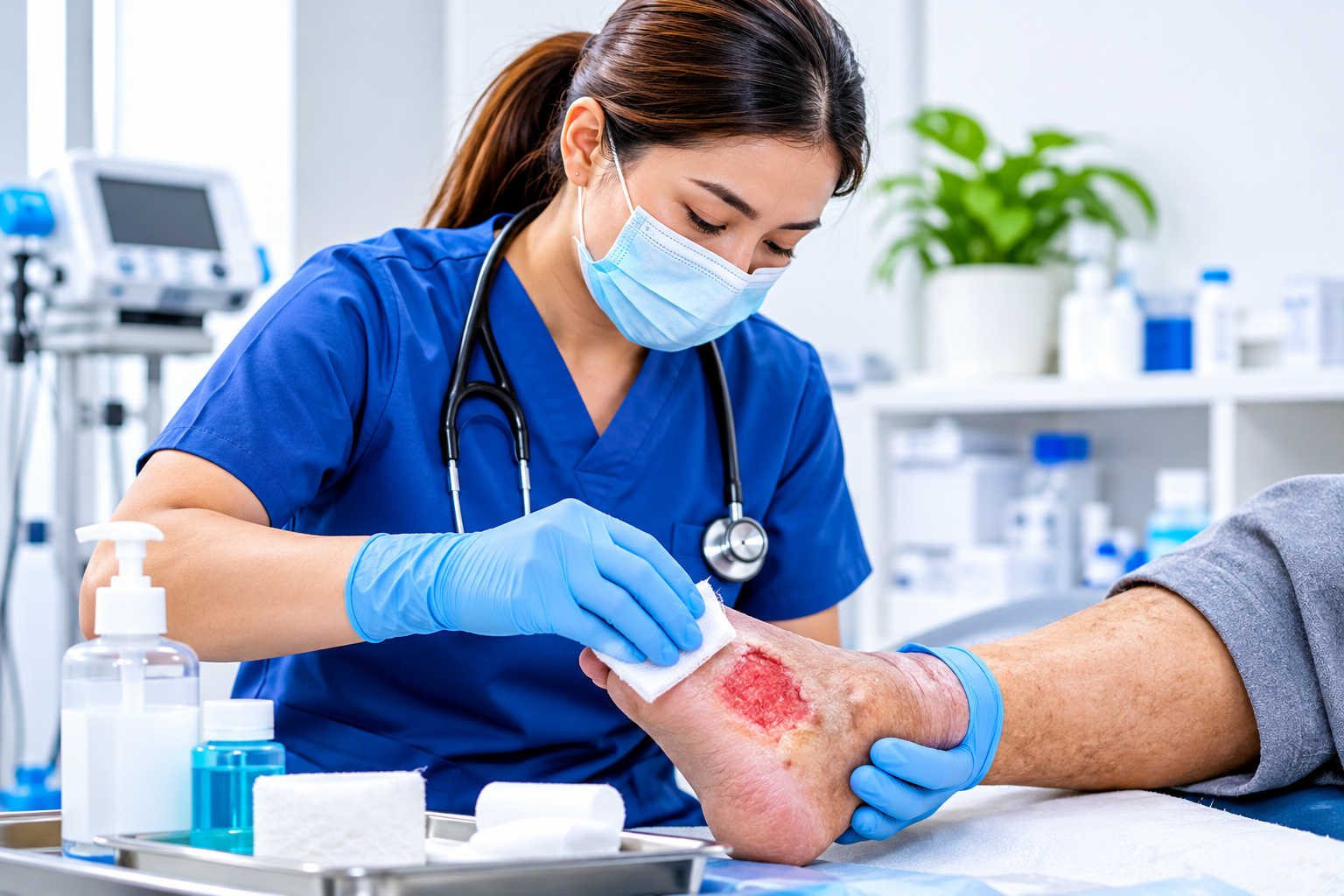
- Diabetic Foot Ulcers: These injuries commonly develop because diabetes can affect nerve function and blood circulation. Patients may not notice minor foot injuries until they become more serious.
- Pressure Ulcers: Also called pressure injuries, these wounds develop when prolonged pressure damages the skin and underlying tissue. They frequently affect patients who spend extended periods in bed or sitting.
- Venous Leg Ulcers: These wounds are commonly associated with poor blood flow through the veins, particularly in the lower legs and ankles.
- Arterial Ulcers: These injuries develop when reduced blood supply prevents tissues from receiving enough oxygen and nutrients.
- Surgical Wounds: Some surgical incisions heal slowly or develop complications that require specialized monitoring and treatment.
- Traumatic Wounds: Cuts, abrasions, punctures, and other injuries may require professional cleaning, dressing, and infection assessment.
- Burn Wounds: Depending on their depth and severity, burns may require specialized wound management to protect damaged tissue and support recovery.
Identifying the wound type is an essential part of developing an effective treatment strategy. A specialist can determine whether the wound needs advanced dressings, pressure relief, infection management, or additional medical evaluation.
Common Signs That You Need a Specialist for Wound Care
Recognizing when a wound needs professional attention can prevent minor problems from becoming more serious. Although small injuries may heal with appropriate basic care, persistent or worsening wounds should not be ignored. One important warning sign is a wound that does not show noticeable improvement despite following appropriate care instructions. Increasing redness, swelling, warmth, and tenderness around the affected area may indicate inflammation or infection. Patients should also pay attention to unusual drainage, particularly when it contains pus or develops an unpleasant odor.
Persistent or worsening pain can indicate that the wound requires further assessment. Repeated bleeding, reopening, or visible changes in the surrounding skin may also suggest problems with healing. People with diabetes, circulation disorders, or weakened immune systems should be especially cautious because these conditions can increase the risk of wound complications. Deep wounds, exposed underlying structures, and injuries caused by serious accidents require prompt medical evaluation. Fever, rapidly spreading redness, red streaks, or sudden deterioration may indicate a serious infection and require urgent medical attention rather than waiting for a routine appointment.
What Services Does a Specialist for Wound Care Provide?
A specialist for wound care provides several services designed to address the specific needs of patients with different wound conditions. The process generally begins with a comprehensive assessment to determine the wound’s depth, size, location, drainage, and surrounding tissue condition. The healthcare professional may also review the patient’s medical history, medications, circulation, and other factors that could affect recovery. Based on these findings, the specialist develops an appropriate treatment plan.
Common wound care services include:
Comprehensive Wound Assessment
A thorough examination helps determine the wound’s condition and identify possible barriers to healing. Specialists may measure the wound, examine damaged tissue, and evaluate the surrounding skin. Additional assessments may be recommended when circulation, nerve function, or infection is a concern.
Wound Cleaning and Debridement
Cleaning removes surface contaminants and helps maintain an appropriate environment for healing. Debridement involves removing dead or damaged tissue when medically appropriate. The technique depends on the wound’s condition and the patient’s overall health.
Advanced Wound Dressings
Different wounds require different dressing materials. Foam, hydrocolloid, alginate, and hydrofiber dressings may be used to manage moisture, absorb drainage, and protect vulnerable tissue. The selected dressing depends on wound characteristics and treatment goals.
Infection Management
Specialists monitor wounds for signs of infection and determine whether additional testing or treatment is necessary. Wound cultures may be recommended when clinically indicated. Antibiotics are used when an infection requires them, rather than automatically for every wound.
Compression Therapy
Compression therapy may help patients with certain venous leg ulcers by improving venous circulation and reducing swelling. It should only be used after an appropriate assessment, particularly when arterial circulation problems are possible.
Pressure Relief and Offloading
Patients with pressure injuries or diabetic foot ulcers may benefit from methods that reduce pressure on affected areas. These may include specialized footwear, cushions, repositioning schedules, and other offloading devices.
Patient Education
Professional wound care also involves teaching patients and caregivers how to follow treatment instructions. Education may cover dressing changes, hygiene, activity adjustments, nutrition, and warning signs that require medical attention.
The Wound Healing Process and How Specialists Support Recovery
The human body follows a natural healing process whenever the skin or underlying tissue becomes injured. However, the speed and effectiveness of recovery depend on several factors, including wound severity, circulation, nutrition, and overall health. A specialist for wound care understands these stages and monitors whether the wound is progressing appropriately.
The healing process generally involves four stages:
- Hemostasis: This is the initial stage when blood vessels constrict and platelets help form a clot to stop bleeding.
- Inflammation: The immune system responds to the injury by helping remove damaged tissue and protect the affected area.
- Proliferation: New tissue and blood vessels develop as the body begins repairing the wound.
- Remodeling: Newly formed tissue gradually reorganizes and becomes stronger as healing progresses.
Certain health conditions can interfere with these stages. Diabetes may affect circulation and nerve function, while smoking can reduce oxygen delivery to tissues. Poor nutrition, inadequate protein intake, infection, and repeated pressure can also delay recovery. Wound care specialists monitor changes in wound size, tissue appearance, drainage, and surrounding skin to evaluate progress. If healing slows down, they may reassess the treatment plan and investigate possible underlying problems. Regular follow-up appointments help ensure that treatment remains appropriate throughout recovery.
Advanced Wound Care Treatments and Technologies
Modern wound management includes several advanced treatments that may help patients with complicated or slow-healing injuries. These options are generally considered when standard wound care is insufficient or when a particular wound condition requires additional support. A specialist for wound care determines which treatments are appropriate based on clinical assessment and individual patient needs.
One option is negative pressure wound therapy, which uses controlled suction through a specialized dressing to manage drainage and support the healing environment in selected wounds. This treatment may help manage certain complex injuries, surgical wounds, and other wounds that require advanced management. Another option involves advanced moisture-balancing dressings, which help maintain suitable moisture levels while protecting the affected tissue. Different dressing materials serve different purposes, making professional selection important.
Some patients may benefit from skin substitutes or cellular and tissue-based products when clinically appropriate. These products may provide additional support for selected wounds that are difficult to heal. Electrical stimulation therapy is another option used in certain wound care programs to support tissue repair. Compression systems may also be recommended for patients with venous ulcers after circulation has been evaluated. Infection management can involve laboratory testing, appropriate antimicrobial treatment, and careful monitoring when indicated. Not every patient needs advanced wound care technology, so treatment decisions should always be guided by a qualified healthcare professional.
Benefits of Consulting a Specialist for Wound Care
Working with a qualified wound care professional offers several advantages for patients dealing with complicated injuries. One major benefit is access to personalized treatment based on the wound’s characteristics and the patient’s overall health. Instead of relying on general wound care methods, patients receive recommendations designed to address their specific medical needs. This approach can be especially valuable for people with chronic wounds, diabetes-related ulcers, and circulation problems.
Another advantage is professional monitoring, which helps identify changes that may require adjustments to treatment. Specialists can recognize warning signs of infection, tissue deterioration, and delayed healing before complications become more severe. Appropriate wound management also helps reduce unnecessary discomfort through suitable dressing selection and careful treatment procedures. Patients and caregivers receive practical guidance about home care, which can improve consistency between appointments. Coordination with other healthcare professionals can also help address medical conditions that contribute to recurring wounds. Although no treatment can guarantee a particular healing timeline, professional wound management can support safer care and improve the patient’s ability to manage recovery.
How to Choose the Right Specialist for Wound Care
Choosing the right healthcare professional is an important step for anyone who needs specialized wound treatment. Patients should begin by checking the provider’s professional qualifications, relevant clinical training, and experience in managing different wound conditions. It is also helpful to determine whether the specialist has experience treating the specific type of wound involved. For example, patients with diabetic foot ulcers may benefit from coordinated care involving wound management, diabetes treatment, and foot health assessment.
The availability of appropriate treatment options is another factor worth considering. A suitable wound care facility should have access to necessary assessment tools, dressing materials, and treatment procedures. Patients should also look for professionals who communicate clearly and explain treatment recommendations in understandable language. Regular follow-up appointments are important because wound conditions can change over time. Before beginning treatment, patients may ask about expected healing milestones, possible complications, dressing schedules, and available treatment options. Selecting a qualified provider who prioritizes patient safety, evidence-based practices, and individualized attention can make wound management more organized and reassuring.
Preparing for Your First Wound Care Consultation
Preparing for an appointment can help patients get more value from their first wound care consultation. Before visiting the specialist, patients should gather relevant medical records, medication lists, and information about previous wound treatments. It is also helpful to remember when the wound first developed and whether its appearance has changed. Patients should describe symptoms such as pain, swelling, drainage, bleeding, and changes in skin color.
During the appointment, the healthcare professional may examine the wound, measure its dimensions, and assess surrounding tissue. Depending on the condition, additional examinations may be recommended to evaluate circulation, nerve function, or possible infection. Patients should ask questions about recommended treatments, dressing changes, activity restrictions, and follow-up schedules. Caregivers can also participate in the consultation to understand how they can support treatment at home. Following the specialist’s instructions after the appointment is essential for maintaining consistency and monitoring healing progress.
Maintaining Healthy Wound Care Practices at Home
Professional treatment is important, but daily care also plays a major role in supporting wound recovery. Patients should follow the instructions provided by their healthcare professional rather than experimenting with unapproved products or home remedies. Washing hands before and after handling dressings helps reduce the risk of introducing harmful microorganisms. Dressings should be changed according to the recommended schedule and using the appropriate technique.
Nutrition is another important part of wound healing. The body needs sufficient protein, calories, vitamins, minerals, and fluids to support tissue repair. Patients should discuss their nutritional needs with a healthcare professional, particularly when they have dietary restrictions or underlying medical conditions. Individuals with limited mobility may need regular repositioning and pressure-relieving equipment to protect vulnerable areas. Patients with diabetes should follow their recommended blood glucose management plan and inspect their feet regularly. Monitoring the wound for increasing redness, swelling, unusual drainage, odor, or pain can help identify potential complications early. Home care should always complement professional treatment, especially when wounds are deep, persistent, or complicated.
Frequently Asked Questions About a Specialist for Wound Care
1. What does a specialist for wound care do?
A specialist for wound care evaluates, treats, and monitors different types of injuries that require professional attention. These healthcare professionals recommend appropriate dressings, wound cleaning procedures, and other treatment options based on the patient’s condition. They also help identify possible complications and educate patients about proper home care.
2. When should I see a wound care specialist?
You should seek professional evaluation when a wound does not improve, repeatedly reopens, becomes increasingly painful, or develops unusual drainage. Patients with diabetes, poor circulation, or weakened immune systems should seek medical advice promptly when wounds develop. Severe symptoms such as fever or rapidly spreading redness require urgent medical attention.
3. What types of wounds require specialized care?
Specialized wound care may be necessary for diabetic foot ulcers, pressure injuries, venous leg ulcers, arterial ulcers, chronic wounds, complicated surgical wounds, and serious traumatic injuries. The treatment approach depends on the cause, severity, and overall condition of the wound.
4. Can a wound care specialist treat diabetic foot ulcers?
Yes. Wound care specialists can help manage diabetic foot ulcers through wound assessment, appropriate dressings, pressure relief, and infection monitoring. They may coordinate with diabetes specialists and other healthcare professionals to address underlying factors affecting healing.
5. How long does it take for a wound to heal?
Healing time varies depending on wound depth, location, circulation, infection, nutrition, and overall health. Minor wounds may heal relatively quickly, while chronic wounds can require extended treatment and regular monitoring. A wound care specialist can assess progress and provide a more individualized treatment plan.
6. Are advanced wound care treatments necessary for every patient?
No. Many wounds can heal with appropriate cleaning, standard dressings, and proper home care. Advanced treatments are generally considered when a wound is complicated or does not respond adequately to conventional management.
7. How often should I visit a wound care specialist?
The recommended appointment schedule depends on the wound’s severity, treatment requirements, and healing progress. Some patients need frequent assessments, while others may require less frequent follow-ups. The specialist will recommend an appropriate schedule.
8. Can I manage wound care at home without professional assistance?
Minor wounds may be managed at home with appropriate first aid and hygiene. However, deep, infected, persistent, or complicated wounds require professional evaluation. Patients with underlying medical conditions should be particularly careful about managing injuries without medical guidance.
9. What factors can delay wound healing?
Several factors can interfere with normal wound recovery, including diabetes, poor circulation, infection, smoking, inadequate nutrition, repeated pressure, and certain medications. Identifying these factors helps healthcare professionals develop more appropriate treatment strategies.
10. How can I prevent wounds from developing or returning?
Preventive measures include maintaining good hygiene, protecting the skin, wearing appropriate footwear, managing diabetes, maintaining proper nutrition, and reducing prolonged pressure on vulnerable areas. Patients with recurring wounds should also follow their healthcare professional’s recommendations for regular monitoring.
Takeaway: Get Professional Support for Better Wound Management
Proper wound management requires more than simply covering an injury with a dressing. Persistent and complicated wounds often need professional assessment to identify underlying causes, prevent infection, and support the body’s natural healing process. Consulting a qualified specialist for wound care allows patients to receive individualized treatment recommendations based on their specific needs. From chronic ulcers and diabetic foot wounds to surgical injuries and pressure-related skin damage, specialized care can help patients manage different conditions more effectively.
Consistent follow-up appointments, appropriate treatment, and healthy home care practices are all important parts of recovery. Patients and caregivers should also learn to recognize warning signs that require additional medical attention. Choosing an experienced healthcare professional can provide valuable guidance throughout the wound healing journey. Most importantly, seeking timely medical evaluation can help reduce preventable complications and support better long-term skin health.