Questions about biological fatherhood can affect families in deeply personal and sometimes complicated ways. A Paternity DNA Test Philippines service provides a scientific way to determine whether a man is the biological father of a child. Unlike assumptions based on physical appearance, family history, or personal beliefs, DNA testing examines genetic information that is inherited from biological parents. The Philippine Supreme Court has recognized DNA analysis as a valid scientific method for addressing questions involving paternity and filiation. For people considering testing, understanding how the process works can make an important decision easier to approach. It is also essential to understand the difference between a private test and testing performed for legal purposes. With the right information, individuals can approach DNA testing with greater confidence, privacy awareness, and realistic expectations.
What Is a Paternity DNA Test?
A paternity DNA test is a genetic examination designed to determine whether a particular man is the biological father of a child. Every person inherits genetic material from their biological parents, creating a genetic profile that can be compared with another person’s profile. During paternity testing, specific genetic markers from the child and alleged father are examined to determine whether the genetic evidence supports biological fatherhood. The Philippine Supreme Court has explained that DNA testing involves extracting DNA from biological samples, generating DNA profiles, and comparing the profiles to determine relationships with reasonable scientific certainty. The test can therefore provide considerably stronger scientific evidence than simply comparing physical features between a child and an alleged father. Depending on the circumstances, the mother’s DNA may also be analyzed to provide additional information and improve the evaluation. A properly performed Paternity DNA Test Philippines can therefore provide families with objective genetic information when biological parentage needs to be established.
How Paternity DNA Testing Works
The process generally begins with the collection of biological samples from the individuals being tested. Buccal or cheek-cell samples are commonly used because they can provide sufficient DNA without requiring an invasive procedure. The collected material is processed by a laboratory to produce DNA profiles for the participants. Scientists then compare relevant genetic markers between the child and the alleged father. Because a child’s DNA comes from both biological parents, the child’s genetic profile can be evaluated against the alleged father’s profile for consistency with biological paternity. Philippine jurisprudence has recognized that DNA analysis can generate a distinctive genetic profile for an individual, with identical twins being an important exception to genetic uniqueness. The laboratory then uses statistical calculations to determine the probability that the alleged father is the biological parent rather than relying on a simple visual comparison.
Who Can Take a Paternity DNA Test?
A standard paternity test usually involves the child and the alleged biological father. The mother may also participate, and her sample can provide additional information when interpreting the child’s inherited genetic material. Testing can generally be performed for children at different ages, subject to the procedures and consent requirements established by the testing provider. Parents or guardians should ask the laboratory about requirements when the child is a minor. In official testing, participant identification and documentation can be especially important because the laboratory needs to establish whose samples are being examined. For example, the Philippine National Police Forensic Group’s published requirements for non-criminal DNA examination include government-issued identification and documents relating to a minor’s identity for paternity testing. Individuals should also inform the provider if the alleged father is unavailable, deceased, or otherwise unable to provide a sample. In complicated situations, alternative family relationship testing may sometimes be considered, depending on the biological relatives available and the purpose of the examination.
Personal Paternity DNA Testing
A personal paternity DNA test is generally intended to provide individuals with private information about biological fatherhood. Someone may choose this type of testing because they want a scientific answer to a personal family question without immediately becoming involved in court proceedings. The sample collection process for a private test may be less formal than the process used for legal testing. However, the exact procedures vary between providers, so participants should ask how samples are collected, identified, analyzed, and reported. A personal test should not automatically be assumed to meet the evidentiary requirements of a court or government agency. If there is a possibility that the result will later be used in a legal matter, it is wise to tell the testing provider before the samples are collected. This allows the appropriate testing procedure and documentation to be considered from the beginning. Choosing the correct test type can help prevent the need to repeat testing later if formally documented evidence becomes necessary.
Legal Paternity DNA Testing in the Philippines
A legal paternity DNA test involves procedures designed to establish the identity of the individuals providing samples and protect the integrity of the testing process. These procedures can include verified identification, controlled sample collection, documentation, and chain-of-custody records. Chain of custody is important because a legal proceeding may require evidence showing how a biological sample was obtained, handled, transported, analyzed, and preserved. Philippine rules governing DNA evidence direct courts to consider factors such as chain of custody, testing methodology, laboratory qualifications, and the reliability of the results. A properly documented test can therefore be substantially different from a private test performed solely for personal information. Individuals should clearly explain to a laboratory whether their purpose is personal knowledge, an administrative matter, or a legal proceeding. When DNA testing is connected to litigation, participants should also consider obtaining guidance from a qualified Philippine attorney regarding the specific circumstances.
Court-Ordered DNA Testing
DNA testing can become particularly important when biological parentage is disputed in a court proceeding. Philippine courts have recognized DNA testing as a scientifically valid method for determining paternity and filiation. Under the applicable Rule on DNA Evidence, a court may order DNA testing after appropriate proceedings when the required conditions are met. These conditions can include the existence of a relevant biological sample, use of a scientifically valid technique, and the potential for the testing to produce information relevant to resolving the dispute. The Supreme Court has also explained that an application for DNA testing may require a showing of a reasonable possibility of paternity or other relevant circumstances before a court orders testing. A court’s decision to permit testing does not necessarily mean that every resulting DNA-related item will automatically be accepted as evidence. Legal proceedings can involve additional requirements concerning relevance, reliability, authenticity, and proper handling of evidence.
Understanding Paternity DNA Test Results
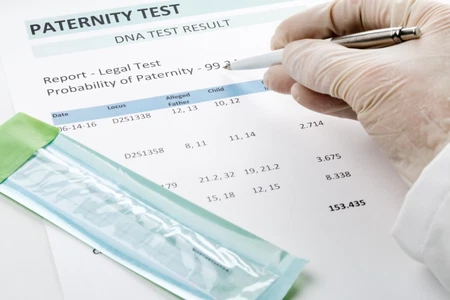
One of the most important parts of DNA testing is understanding how the results are expressed. A paternity report typically does not simply state that a person is “100% the father.” Instead, laboratories use statistical calculations to provide a probability of paternity when the genetic evidence supports biological fatherhood. Philippine jurisprudence has explained that a probability of paternity will not reach exactly 100% because paternity inclusion is probabilistic in nature. Under the Philippine Rule on DNA Evidence, DNA results that exclude the putative parent are treated as conclusive proof of non-paternity, while a probability of paternity of 99.9% or higher creates a disputable presumption of paternity. Results below that threshold may be treated differently in legal proceedings and may function as corroborative evidence rather than creating the same presumption. For this reason, readers should avoid interpreting a DNA report based only on a single percentage without understanding the report’s full findings and intended use.
Why the Mother’s DNA May Be Included
A paternity test can often be performed by comparing the child and alleged father, but including the mother’s DNA may provide additional information. A child receives genetic material from both biological parents, so identifying which genetic markers come from the mother can help clarify the portion inherited from the biological father. Philippine Supreme Court discussions have noted that the accuracy of probability estimates can be higher when the putative father, mother, and child are all tested compared with testing involving only the alleged father and child. This does not mean that the mother’s participation is always mandatory for every paternity test. The specific testing design depends on the laboratory, the available participants, and the purpose of the examination. Individuals should therefore ask the testing provider whether a mother-child-father test is recommended for their particular circumstances. When a legal dispute is involved, the testing provider and legal counsel can also help determine what participant configuration is appropriate.
Legal Uses of Paternity DNA Testing
A Paternity DNA Test Philippines service may become relevant when biological parentage is disputed or needs to be scientifically established. DNA evidence can be considered in matters involving filiation and other family-related legal questions. It may also become relevant to disputes involving parental relationships, support, inheritance, or official recognition of biological relationships, depending on the facts and applicable law. Philippine jurisprudence has repeatedly recognized DNA testing as a viable method for resolving questions concerning biological relationships. However, a DNA report by itself does not automatically resolve every legal or civil-record issue connected to parentage. Different legal matters can have separate procedural requirements, and courts may need to consider other evidence alongside DNA findings. Anyone involved in a legal dispute should therefore distinguish between obtaining scientific evidence and completing the legal process associated with that evidence. Professional legal advice may be appropriate when paternity testing is connected to an active court case or a dispute involving a child’s legal status.
Personal Test vs. Legal Test
The difference between personal and legal testing is important for anyone researching a Paternity DNA Test Philippines. A personal test is generally designed to answer a private question about biological fatherhood, while a legal test is structured with additional safeguards for official use. Personal testing may have simpler sample-collection arrangements, depending on the provider. Legal testing generally requires stronger identity verification and documentation to establish the origin and handling of each biological sample. Chain-of-custody procedures can be particularly important when results may be presented to a court. A person who initially orders a personal test and later decides to use the result for legal purposes may discover that additional testing is necessary. Asking the provider about the intended purpose before testing can help ensure that the selected service matches the individual’s needs. This distinction is especially important when a paternity question could eventually affect legal rights, responsibilities, or family records.
What to Look for in a Paternity DNA Testing Provider
Choosing a reliable testing provider requires more than comparing prices. Individuals should ask about the laboratory’s experience, testing methodology, sample-collection procedures, reporting process, and quality controls. For legal testing, it is particularly important to ask how identities are verified and how chain-of-custody documentation is maintained. The Philippine Rules on DNA Evidence direct courts to consider the qualifications of the laboratory and analyst, the methodology used, and the reliability of the testing results. A reputable provider should also be able to explain what type of test is being offered and whether it is intended for personal or legal purposes. Privacy should receive equal attention because DNA results contain sensitive genetic information. Before providing a sample, individuals should ask how biological materials and genetic information are stored, who can access the results, and how information is protected. Taking time to evaluate these factors can help participants select a testing service that fits both their scientific and practical requirements.
Privacy and Confidentiality in DNA Testing
DNA information deserves careful protection because genetic information can reveal biological relationships between individuals. People considering testing should ask the provider about its privacy practices before samples are collected. Questions can include who receives the report, whether samples are retained after testing, how results are stored, and whether information can be released to another person. Philippine rules concerning DNA evidence recognize the confidential nature of DNA profiles and related testing information in legal proceedings. Individuals should therefore be cautious about sharing DNA reports casually, particularly when the report involves a child or other family members. Parents and guardians should also consider the child’s privacy when making decisions about genetic testing. A provider should be able to explain its policies in clear language rather than leaving participants uncertain about what happens to their samples or information. Understanding privacy practices before testing can help families make more informed decisions about sensitive genetic information.
Factors That Can Affect the Testing Process
Several practical factors can affect how a paternity DNA test is performed and interpreted. Incorrect sample collection can create difficulties for a laboratory, which is why participants should follow the provider’s instructions carefully. Samples also need to be correctly identified and handled to prevent confusion or contamination. Legal tests require additional attention because documentation and chain-of-custody procedures can affect the evidentiary value of the results. The laboratory’s testing methodology, analyst qualifications, reference population data, and statistical calculations can also be relevant when evaluating DNA evidence. Complicated family circumstances may require a different testing strategy, particularly when the alleged father cannot participate. Multiple possible biological fathers may also require careful planning so that the appropriate individuals are tested. Discussing unusual circumstances with the laboratory before sample collection can help ensure that the selected testing approach is appropriate.
Preparing for a Paternity DNA Test in the Philippines
Preparation can make the testing process easier and help prevent avoidable delays. First, determine whether the test is intended for personal information or possible legal use. Next, ask the testing provider which participants need to provide samples and what identification or documentation is required. If a child is a minor, ask specifically about consent and documents related to the child’s identity. For example, the PNP Forensic Group lists identification and relevant documents among its requirements for non-criminal paternity DNA examination. Participants should also ask how samples will be collected, how long processing normally takes, and when the report will be available. If the result may be used in court, participants should ask about chain-of-custody procedures before testing begins rather than after receiving the report. Being prepared allows individuals to approach the process with clearer expectations and fewer surprises.
Frequently Asked Questions About Paternity DNA Testing
What is a Paternity DNA Test Philippines service?
A Paternity DNA Test Philippines service examines genetic information from a child and alleged father to determine whether the genetic evidence supports biological paternity. The testing process uses DNA profiles and statistical analysis rather than physical resemblance. The mother may also participate when appropriate.
How accurate is a paternity DNA test?
Modern DNA testing can provide highly informative results when properly performed. Philippine jurisprudence recognizes a 99.9% probability of paternity as the threshold for a disputable presumption of paternity under the applicable Rule on DNA Evidence. Proper sample collection, laboratory methodology, and interpretation remain important factors.
Does the mother need to take the test?
Not necessarily. A standard paternity examination can compare the child and alleged father, but including the mother can provide additional genetic information. A testing provider can explain whether including her sample would be beneficial for the particular examination.
Can a baby undergo a paternity DNA test?
Paternity testing can be performed for children at young ages. The laboratory will provide instructions concerning sample collection and any consent or documentation requirements. Parents or guardians should ask the provider about requirements for minors before scheduling the examination.
Is a cheek swab sufficient for DNA testing?
Cheek-cell samples can provide DNA suitable for genetic analysis. The collection method is generally straightforward and does not necessarily require a blood draw. Legal testing may involve supervised collection and identity verification to protect the integrity of the evidence.
Can a paternity DNA test be used in court?
A DNA test can potentially be used in court when it satisfies applicable evidentiary requirements. A personal test should not automatically be treated as equivalent to a legally documented examination. Legal testing generally includes procedures designed to establish identity and maintain chain of custody.
What does a 99.9% probability of paternity mean?
A 99.9% probability means that the statistical analysis strongly supports the tested man’s biological paternity. Under the Philippine Rule on DNA Evidence, a probability of paternity of 99.9% or higher creates a disputable presumption of paternity. The complete laboratory report and legal circumstances should still be considered.
What happens if the test excludes the alleged father?
An exclusion means that the genetic evidence does not support the tested man’s biological paternity. Under the applicable Philippine DNA evidence rules, DNA results that exclude the putative parent from paternity are treated as conclusive proof of non-paternity. Proper testing procedures remain essential.
How long does paternity testing take?
Processing times vary among providers and depend on factors such as sample quality, laboratory workload, test type, and whether additional analysis is necessary. Legal testing may also involve scheduling and documentation requirements that differ from private testing. Participants should ask the provider for its current estimated processing period.
Can DNA testing automatically change a child’s birth certificate?
No. A DNA test and a change to civil records are separate matters. Even when DNA evidence establishes a biological relationship, additional legal or administrative procedures may be necessary before information on an official record is changed. Individuals should seek appropriate legal guidance when civil-record changes are involved.
Is DNA testing confidential?
DNA information is sensitive and should be handled carefully. Philippine rules governing DNA evidence recognize confidentiality protections for DNA profiles and related testing information in applicable legal proceedings. Individuals should ask their chosen provider about its privacy, storage, access, and sample-retention policies.
Takeaway
A Paternity DNA Test Philippines service offers a scientific way to address questions about biological fatherhood through genetic analysis. Understanding the difference between personal and legal testing is one of the most important steps before providing samples. Individuals should also understand how DNA profiles are generated, how probability of paternity is calculated, and how results may be treated under Philippine rules. The Philippine Supreme Court has recognized DNA testing as a valid scientific method for addressing questions involving paternity and filiation. When testing may be used in court, proper identification, sample handling, chain of custody, laboratory procedures, and documentation become especially important. Privacy should also remain a priority because DNA results contain sensitive information about individuals and families. By choosing an appropriate testing method and a qualified provider, people can approach paternity testing with better preparation, realistic expectations, and greater confidence in the scientific process.